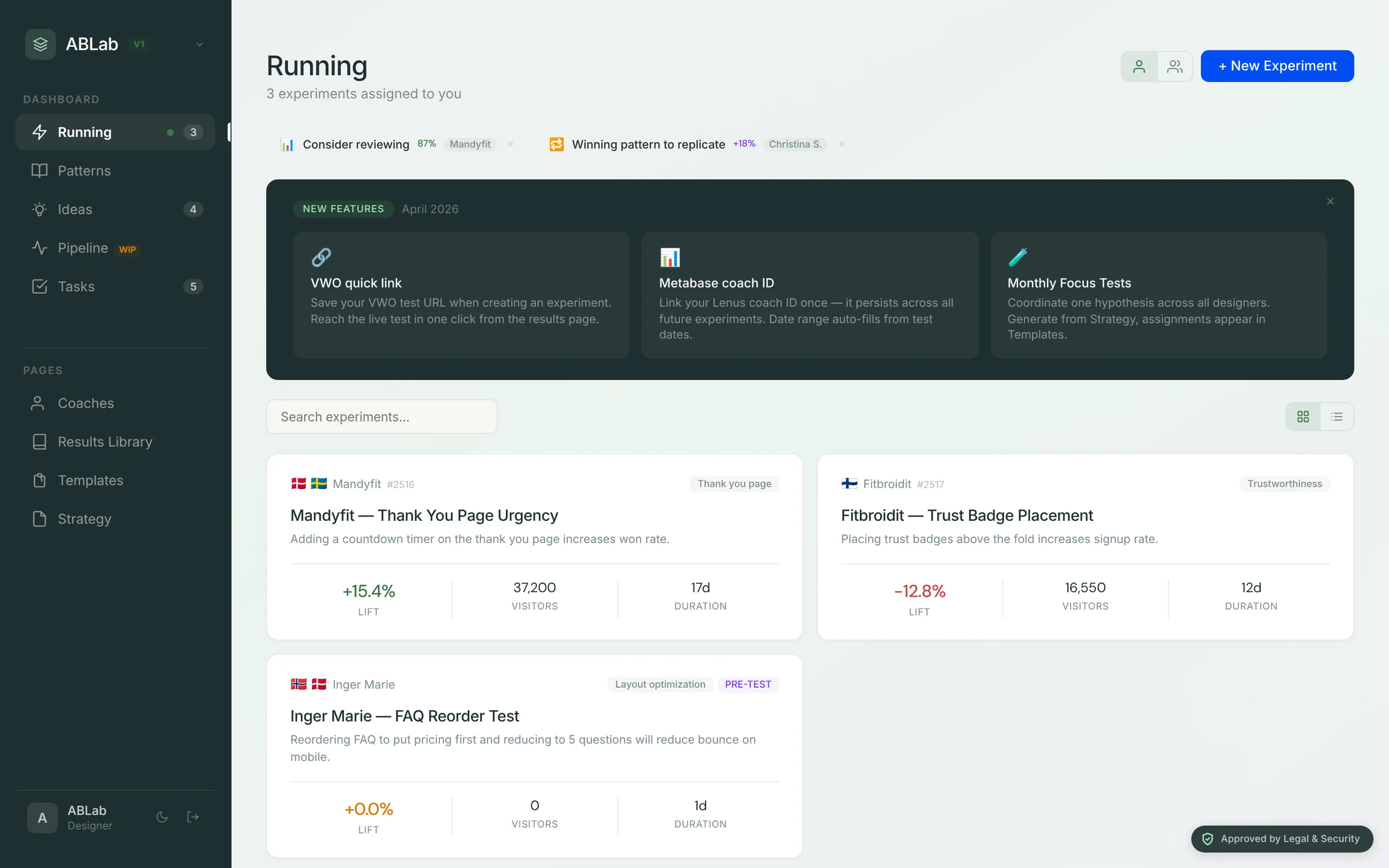
The CRO Dashboard, built for the team.
I built and shipped an internal A/B-testing platform for my growth team at Lenus. It replaced a weekly spreadsheet routine and became the team's testing workspace.
The workflow before: three tools and a screenshot.
To report one test, I pulled data from several tools, rebuilt it in a Google Sheet and shared a screenshot. Every designer repeated the same routine.
- KAMs received a spreadsheet screenshot when they needed a verdict.
- Designers stitched the same exports together every week.
- Old results stayed buried in a database that was slow to browse.
- Four markets had no shared view of the hypotheses worth pursuing.
It started as one question to Claude.
I was tired of rebuilding the same report. One small question to Claude turned into a product:
- 01"Can you make the results from this Google Sheet more visual?"
- 02If Claude could read the sheet, I could skip it and import the CSV directly.
- 03Each annoyance in my own workflow became the next feature.
Codify how the team already decided.
I encoded the Bayesian model, Monte Carlo draws and 90% threshold the team already used. The method stayed familiar; the result became easier to act on.
Three stages, one funnel
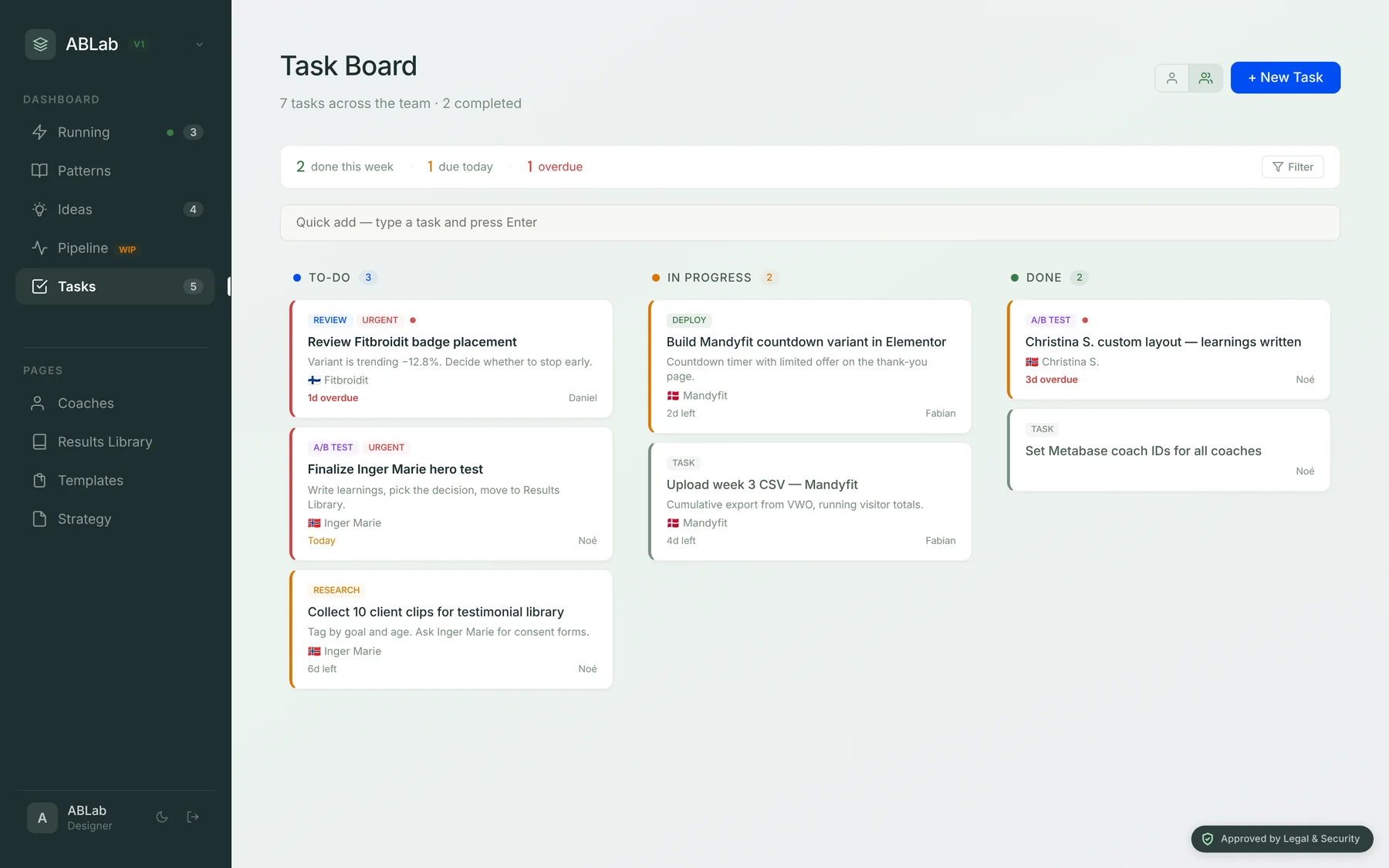
Each test is scored across the full funnel, so a sign-up win cannot hide a weaker close rate. Fitbroidit proved why that matters.
Hypotheses as first-class objects
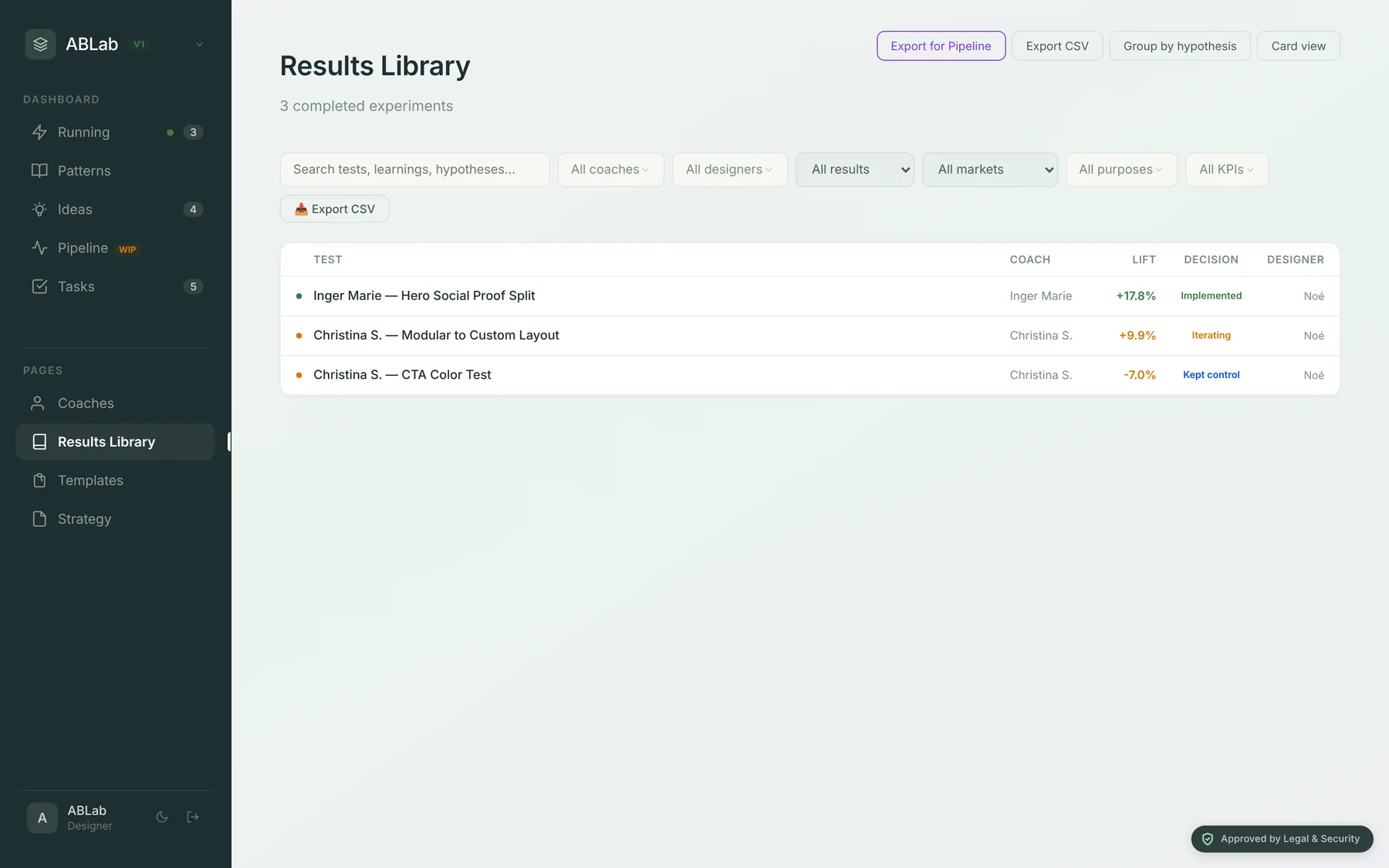
Tests are tagged by hypothesis, so the team can answer a simple question quickly: "Have we tried this before?"
Written for the people who decide
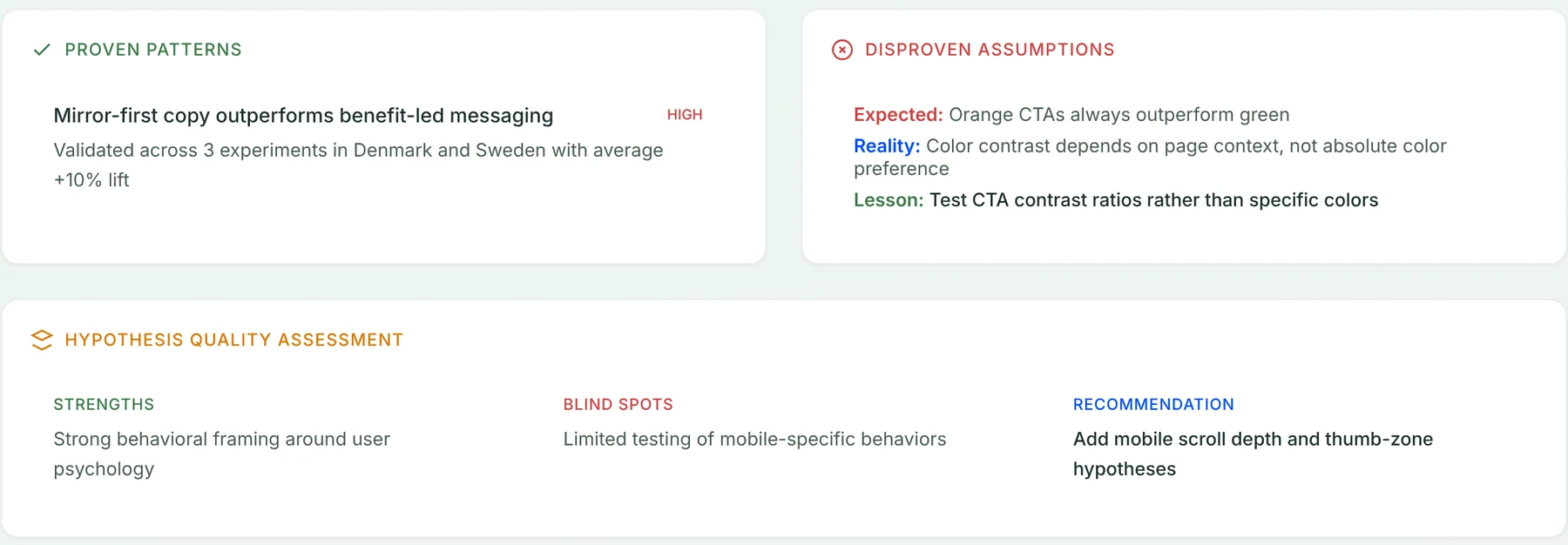
One click gives the KAM a plain-language conclusion they can forward as-is.

Built by its first user, then bent by its second.
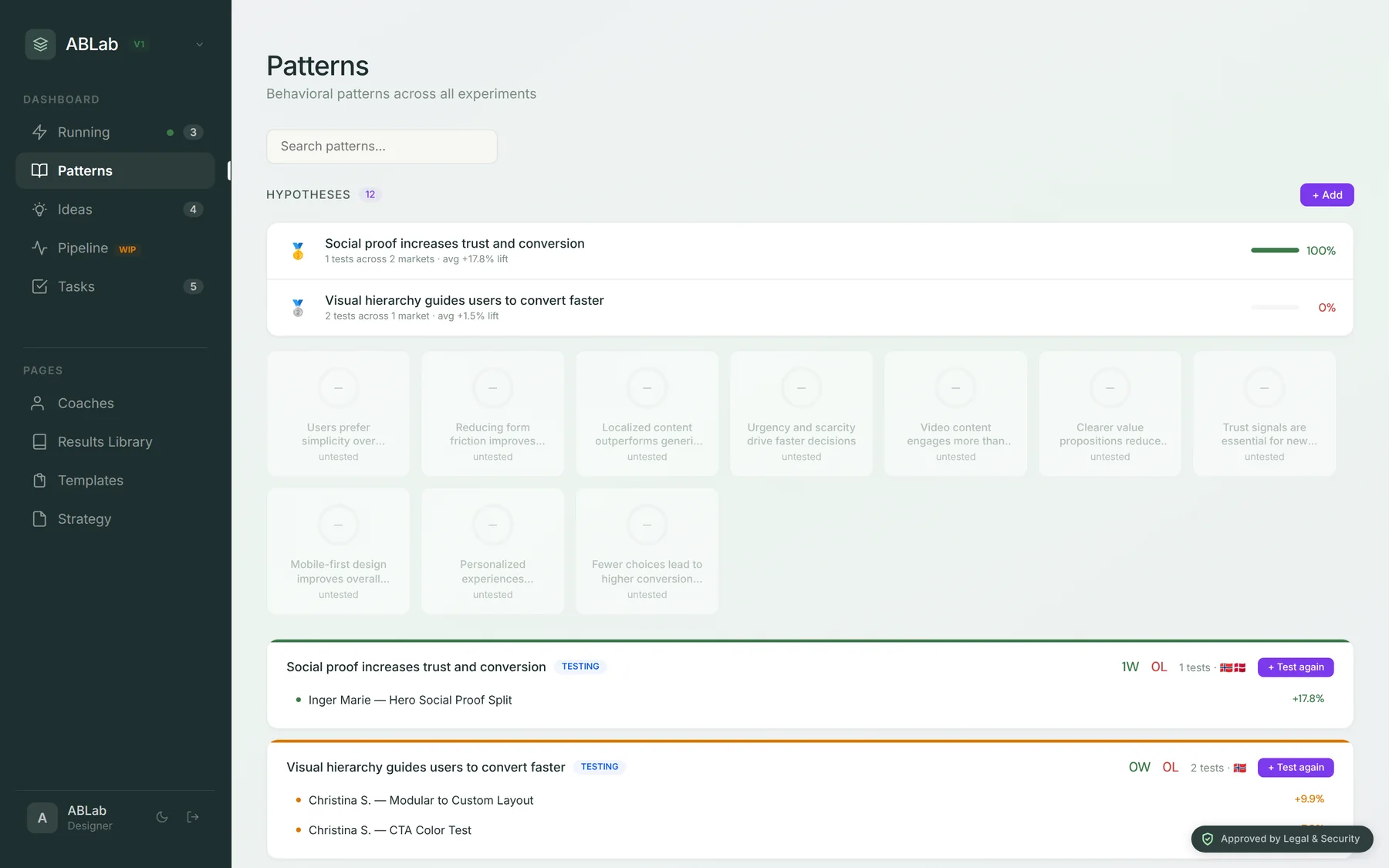
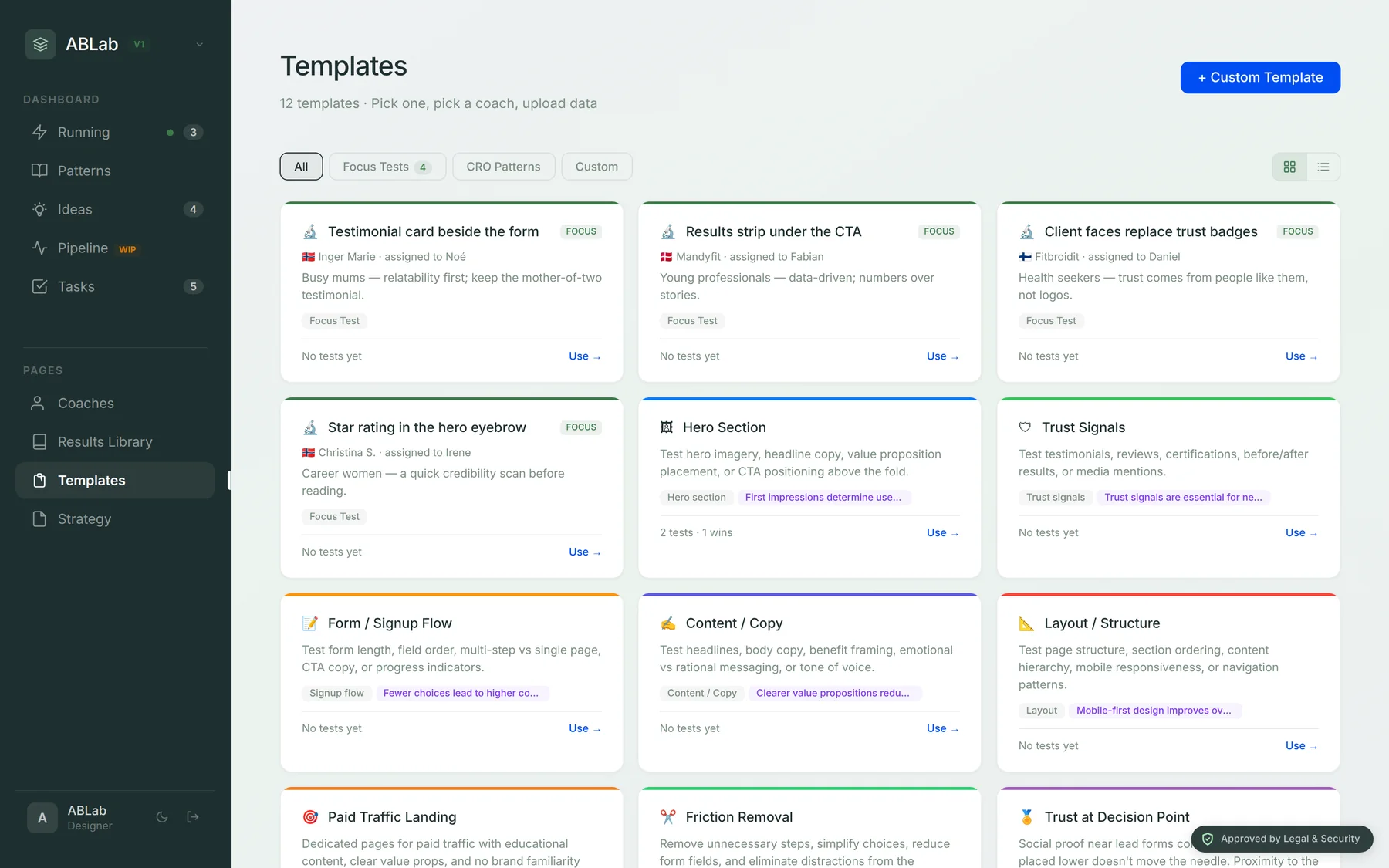
I used ABLab every week. The CSV template and VWO import came from my own friction; ABC tests arrived after a colleague asked for them. That request made it feel like a team product.
From a side deploy to an approved tool.
I first shipped ABLab quietly on Firebase and Vercel. Once people wanted to use it with real client data, I took it through Legal & Security. The approval badge started as a joke for my teammates: we're actually allowed to use this now.
From my workflow to the team's.
Four designers still use ABLab. Hundreds of tests have run through it, results are shared directly from the tool, and finished experiments feed a library the team can search.
"I started by fixing the task I dreaded each week. The satisfying part was watching that fix become useful to everyone else."
An identity torn between the white cube and the street.↗